Showing posts with label Howard Shore. Show all posts

Saturday, 14 November 2015

SPOTLIGHT Score Review

                                                                                                                                                                                                                                                             ____
Check it out... if you are a fan of Howard Shore’s more intimate and brooding scores or are curious to hear him write for a smaller ensemble, Spotlight being as good a place as any in Shore’s filmography to start.

Skip it... if you have an aversion towards Shore’s introspective scores or anything vaguely reminiscent of Thomas Newman’s standard rhythmic textures.
                                                                                                                                                                                                                                                             ____

Wednesday, 17 December 2014

THE HOBBIT: THE BATTLE OF THE FIVE ARMIES Score Review

                                                                                                                                                                                                                                                             
Check it out... if you're an avid fan of this franchise, and desire a satisfying and powerful conclusion to this awe-inspiring and epic series of scores, as The Hobbit: The Battle of the Five Armies concludes Howard Shore's Middle-Earth scores with grandeur and emotional poignancy

Skip it... if you have and will admonish any scores that have come out of this series, despite their obvious thematic ingenuity, emotional complexity and racial variety (in terms of the different sounds for different races and factions within the films)
                                                                                                                                                                                                                                                             

Thursday, 29 May 2014

Lord of the Rings: The Two Towers Score Review

                                                                                                                                                                                                                                                             
Check it out... if Fellowship of the Ring's outstanding choral work and glorious themes proved one of the highlights of 2001 for yourself, and you wish to see a darker and more brooding score than the prior installment into the franchise

Skip it... if your ears do not hunger for sensational orchestral bliss, gifted by the talented Howard Shore, who has provided here one of his most credible scores
                                                                                                                                                                                                                                                             

Friday, 21 March 2014

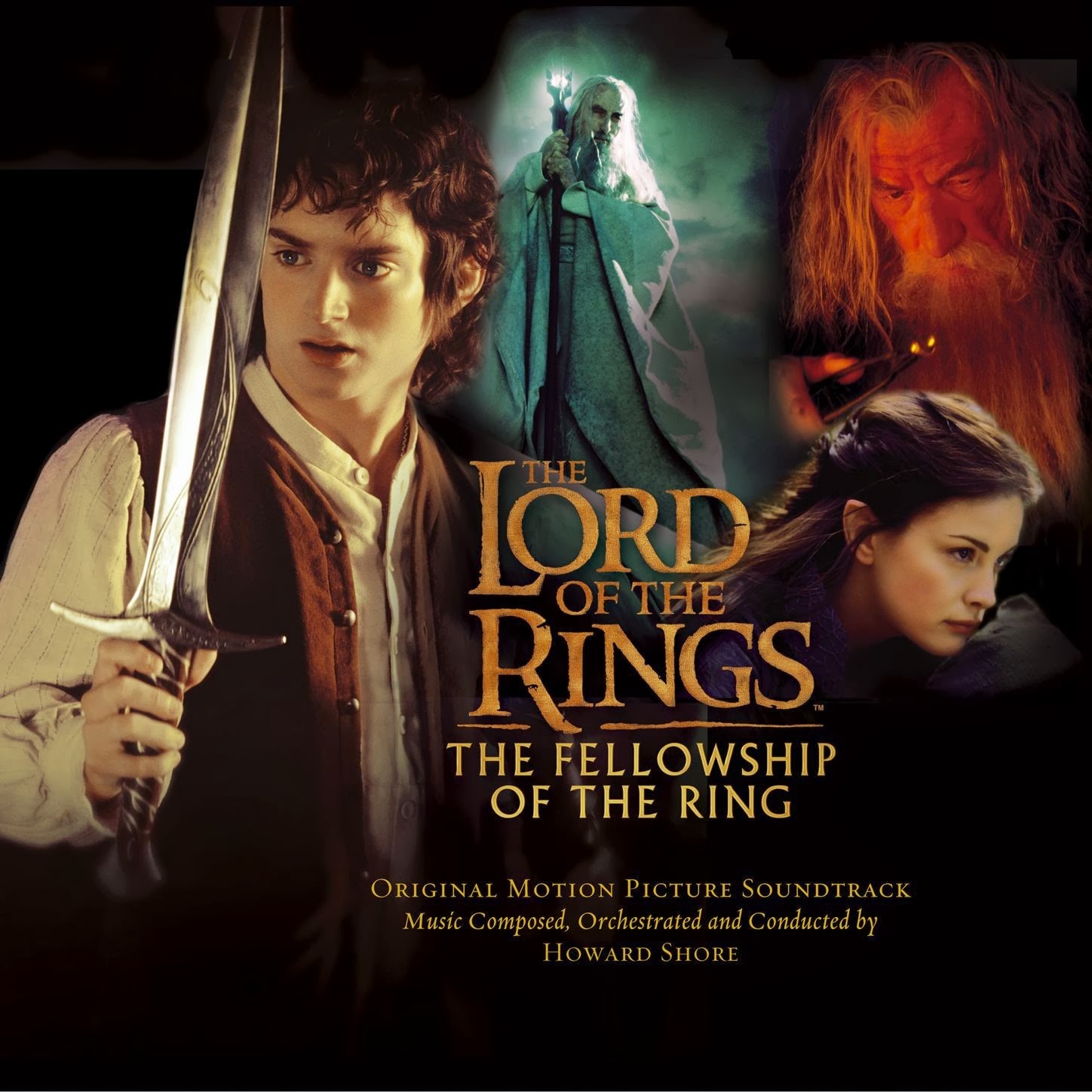
Lord of the Rings: The Fellowship of the Ring Score Review

Title: Lord of the Rings: Fellowship of the Ring
Composer/s: Howard Shore
Length: 1 hour, 10 minutes
Track Count: 18 tracks
Year of Release: 2001

With the final installment in Middle-Earth hitting us at the end of this year, I thought it quite necessary to delve into all the individual scores within the Peter Jackson Middle-Earth franchise that I haven't reviewed yet; that's right, from Fellowship to An Unexpected Journey! I'll be revisiting each chapter in the franchise every so often, leading up to the release of the final Howard Shore Middle-Earth score. It's quite sad, to think of it like that. But without further ado, let's explore the first piece in the puzzle, Fellowship of the Ring!

Peter Jackson's first exploration into the realm of epic fantasy turned out to be the least satisfying of films for myself. Fellowship as a film feels oddly paced, and feels disconnected with itself; the first act and second acts of the film don't slot together well to create a single, coherent film that follows a single direction the entire running period. Despite this fault, Fellowship is still filled to the brim with amazing action sequences, an incredibly versatile range of locations, and top-notch performances. Apart from pacing, there really is nothing to fault within Fellowship of the Ring; high esteem, for a very good film. Even Tolkien purists, for the most part, could rest easy. The vast majority of the film was well transferred from the book, as was Jackson's intention. Unlike so many directors and screenwriters nowadays who butcher the source material they are trying to adapt, Jackson set to bringing the world that Tolkien had created to life, whilst staying as faithful to the source material through the entire duration of the production. 

Leading up to the release of the films and their subsequent scores, fans of film music stipulated on the composer who would be undertaking the juggernaut that is the Lord of the Rings trilogy. Many mistakenly expected that veteran composer James Horner would helm the music, thanks to his knowledge in the fantasy realm. These rumors would be proven false when Howard Shore was announced as the official composer for the trilogy of films. The scoring world held a collective gasp at the announcement; Howard Shore was certainly not someone who was experienced in the way of fantasy. His scores for Silence of the Lambs and The Fly had him typecast as a dark, horror composer, who impressed more with subtlety than grandeur, the kind of music that would be required for the films. Yet, despite the outrage from listeners everywhere, Shore set to work to compose, orchestrate and produce 12 hours of music within 4 years; a mammoth operation that very few composers can boast of. Whilst James Horner may have more naturally fit into the role of composer for the 3 films, a range of factors allowed Shore to comfortably attain the nod of approval from Jackson and his producers; his skill with an incredibly large number of instruments, his intricate, detailed writing ability, and his careful boldness. Whilst Horner is undoubtedly a brilliant composer, Shore is simply more suited to applying a rich number of versatile, ranging themes for all aspects of the huge world of Middle-Earth. Providing those versatile themes is exactly what Shore did; he provided an incredibly large number of themes, all for different aspects of Middle-Earth, including themes for near all our main characters, races that exist within the fantastical world, as well as locations. All this he does without necessarily reusing any material and themes he had already established and elaborated upon; Shore would take the basis from something that had been introduced formerly, and expand upon it, to explore more layers of the world. 12 hours of music was composed, and never did any of it feel rehashed. It's a marvel in composition skill.

Without a doubt, Lord of the Rings: The Fellowship of the Ring is one of the best scores ever composed. There is so much rich variety in everything that is indulged in within the score, that you simply are never less than fully engrossed and entertained by what Shore has provided. The main theme, for example, one of the most recognizable and brilliant themes in film scoring history, is a thematically perfect set, which recognizes the vast size and beauty of all of Middle-Earth, and respects that within the music. It's a theme that sets the stage for the entire score, and the tone that will be undertaken; bold adventure! Whilst a lot of fantasy scores are driven by the action pieces, or those most subtle, slight moments, Shore consistently stays true to what the source material and film aspire towards, that being the tone for adventure. Shore looks towards expressing the unknown within the music; from the beginning of the film and score, our hero Frodo is simply accustomed to the way of his small community, The Shire. From there, Frodo and his companions must venture into unknown territory, and Shore represents that aspect of the film perfectly. You explore material throughout the score that sounds like nothing heard previously, all darker than the former. You can almost picture the story in your head, thanks to the effect the music has. You understand in musical form what is happening; the hero is venturing into the dark abyss. Shore represents that dark abyss with material that is thematically accomplished, and beautiful.

Shore takes measures to make sure you understand that all factions, races and individuals within the story are interconnected. The balance of the world has all of the different races depending on each other for survival, and this is respected and realised within the music. Small similarities and bridges between themes allow you to understand this, all woven together seamlessly, despite the fact that all themes and motifs are individual and relative to their own respective properties and lands. It's masterfully done, seeing as all the themes for the individuals and races are so diverse. It's as if Shore set himself challenges along the road to completion, seeking out the most obviously painstaking approaches, which would have the best effect in both the film's context, and album's context. This is an incredibly well thought out score, that brings together not only the best in Howard Shore, but the best in orchestral music in general. I've always thought classical music to be the most charismatic and well composed orchestral brand out there, and paired with the intoxicating atmosphere of the Lord of the Rings realm, we have a match made in heaven. Shore's most unparalleled approach for such a mammoth task is something that deserves incredible acclaim, as despite the fact that there are 12 hours of music Shore needed to develop, all original and involving, Shore has created something that is composed with classical grandeur wholeheartedly, and with the majestic, epic grace of James Horner, Jerry Goldsmith and John Williams combined. All brilliant composers, no doubting that, yet Howard combines the adventure and ambitiousness that often accompanies Horner's scores, Goldsmith's inventiveness and willingness to look outside the box for uncommon sounds that add to the individual persona of the score, and William's skill in constructing elaborate, fleshed out themes and character driven music. All together, combined, and it makes for some insanely beautiful, heart wrenching and captivating orchestral music. 

On the original score release, consisting of 18 tracks, every piece is a highlight, with a few pieces standing out with individual moments and riffs which truly take you aback. The most commonly acclaimed piece in the entire score, by my account, is the piece The Bridge of Khazad Dum, which initally elaborates on the theme for the trilogy, followed by harrowing, exciting, brass-based melodies, which all comes to a sudden conclusion, before reigniting with one of the most devastatingly emotional sets in scoring history. The priceless (more likely not!) use of the vocals turns Khazad Dum into something of it's own, and nothing else on the entire score can simply match the emotional gravity and complexity that is instilled within the piece. The instantly recognizable Hobbit theme makes it's first appearance in Concerning Hobbits, again, one of the stand out pieces on the card, that has me dancing and hopping more often than not! It's such a blissful theme, comprised of a faultless tin whistle solo, followed by a sharp and appropriate melody delivered by a fiddle. It's a parting from the rest of the tone that the score takes, which is something that I welcome happily. Parting from the original release, the Complete Recordings, released in 2005, includes 3 hours of insanely well cultivated music, that despite the enormous length that often wards off less enthusiastic listeners, consistently provides reinvigorating, fresh music which never seem to tire. If you feel up to the challenge, listening to the 3 hour recordings will be bliss for your mind. If you're like me, your attention span simply won't hold out that long, no matter how concentrated and determined you are! No matter; taking the recordings in short bursts seems to prove worthwhile and fruitful. It is outstanding and utterly unbelievable to behold, despite the fact that I've listened to the recordings quite a few times, that Shore could've put so much time and effort towards a single film. Never ending praise flutters from my lips and fingertips, every single time the music begins. It's not hard to believe that Shore won an Oscar from his work on Fellowship; it's just too damn inventive and engrossing to discard as a nominee, and anything less than an award-worthy score. 


Conclusion:
When people ask me of my favourite score, I tell them Lord of the Rings: The Fellowship of the Ring. It is not because my love for the films are unparalleled, and I feel an obligation to reward it highest marks. It is because Shore's timeless dedication and skill is unprecedented in not only the fantasy-epic genre, but in general. This trilogy of work is unmatched, and Fellowship is the opening and greatest chapter to that trilogy, and for that, it earns nothing but praise.

Junkie Score: 100
Buy or Stream? Buy (Duh!)


I will be listing highlights during the next installment of this set of reviews. I just saw it as unnecessary, seeing that I state how every piece is a highlight!

Thanks for reading! Here's some links to various accounts:

Last.FM    


Friday, 10 January 2014

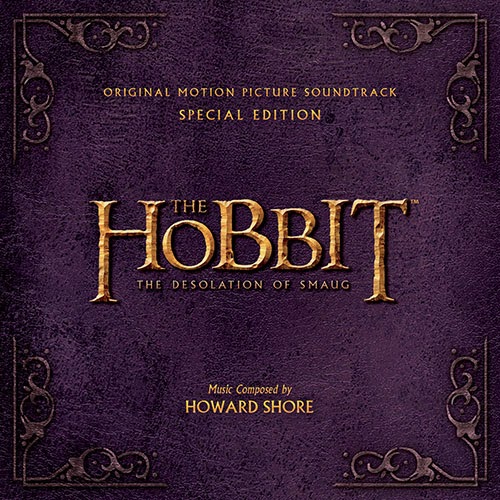
The Hobbit: The Desolation of Smaug Score Review

Title: The Hobbit: The Desolation of Smaug

Composer/s: Howard Shore

Length: 2 hours, 9 minutes

Track Count: 29 tracks (Extended Edition) 

Year of Release: 2013


Why friends, it's finally that time! Howard Shore's score to the very anticipated film, The Hobbit: The Desolation of Smaug, a film I adored, has been released! Actually, it was released a couple of weeks ago; it's just that Blogger hates me, and decided that I wasn't aloud to release any reviews for a while. Well, now I can, so I bring to you the review to The Hobbit: The Desolation of Smaug - Extended Edition score.

I'm going to begin with explaining my love for the rest of the Middle Earth scores. I recently decided to have a listen to Fellowship of the Ring, the extended edition of Return of the King, and An Unexpected Journey. Unfortunately, I couldn't find a decent version of The Two Towers on Spotify, so I decided to leave that out for now. What I found, is that all the scores are full of incredibly wonderful, elaborate music. My favourite score out of that 3 has to be Fellowship of the Ring, as it introduces us to the world of Middle Earth in spectacular fashion. An Unexpected Journey is, though, second to Fellowship, with it's large array of themes, and new and exciting music! I loved it, and it's one of my favourite scores from 2012. Now... Desolation of Smaug. I ordered the extended edition from Intrada, and am I disappointed in what Shore has given us? Partially, I must say. Desolation isn't as full of variety or excitement as An Unexpected Journey, and repeat listens are almost necessary to be able to fully take in what Shore has given. It's not all bad, though, so I'll get into what I liked and what I didn't.

I'm going to begin with the pieces and themes that I did really adore. The Lake-Town theme, which appears in both Protector of the Common Folk and Thrice Welcome, is one of my favourite themes from all of the music of Middle Earth. It's powerful, fun and ultimately, very simple. I can play it on my keyboard, for damn's sakes! It's an easy theme to whistle, and it'll stick in your head for days. The secondary theme for Tauriel, a very beautiful Elvish themed piece, has fortunately grown on me, since my first listen. This theme appears within Beyond The Forest, most prominently, which is one of my favourite pieces from the score. It's emotional, well composed and a joy to listen to. The theme to Beorn as well, which appears in the self-titled House of Beorn is also very good. For the most part, the music is still quite as exciting and dramatic as it always has been. Unfortunately though, a lot of this score seems, to me at least, to be filler.

The Quest For Erebor is the first piece on the score, and it's a bit of a letdown. It throws us into the thick of it a little too quickly, and whilst composed well, isn't that good a listen. Of course, it has the obligatory Hobbit theme, which I quite enjoy, but apart from that, it's quite dull. A lot of the score is like this. It feels, on the first few listens at least, like Shore is just trying to pound us over the head with depressing, dark music. I mean, seriously! We get it, Desolation of Smaug is full of more peril and danger than the previous film! He takes this to the extreme, and it can get quite irritating. Sure, we get some excitement in pieces such as Barrels out of Bond, one of my favourite pieces on the card. It still has that dark undertone to it, but at least it's got a bit of pace and some peaks. A lot of the score just stays slow and deep, and it gets a little boring after a while. 

Like I mentioned, we do have some excitement, here and there. When it does pop up, it's very good to listen to! Barrels out of Bond and The Forest River both have some wonderful music which really gets your heart pumping. Tauriel's main theme appears heavily in The Forest River, and it's wonderful! It never seems to stop, and in a score which has so many points at which it slows down and ceases to amaze, that's something. Most of the fast paced pieces occur within the beginning of the score, which makes sense, I guess. The film does slow down quite dramatically within the final hour, thanks to the Smaug conversations. Within the film, Smaug is certainly something to behold, but here, he's quite dull. His music is slow and repetitive, compared to so much of this score. Sure, it's grown on me every listen; but that's after 6 repeat listens. That's a little too many to find some good in the piece! 

The Desolation of Smaug certainly gets better after repeat listens, for sure. My first listen was incredibly dull, and I just couldn't find much good. The second and third listens were a lot of the same. It was my fourth listen, in which I paid a lot more attention, that I found some really good music lying within. Of course, I was still subjected to some painfully slow and uninteresting music which I just couldn't find any reason to like. But, luckily, this time, I had some good to pay attention to as well. It was a welcome contrast; all this really well composed, good music, and all this slow, boring brass blasting. It's better than all brass blasting, to be honest.

We do have pieces which I have mixed feelings about. The Nature of Evil is one of those. There are points in which the piece really picks up, and sounds quite evil. But, for the most part, the piece is just loud, constant brass which failed to impress me. Again, this occurs in The Hunters, a 9 minute piece. There are points at which Shore has excelled in making an exciting, dark action piece that enthralls me. There are points at which I got incredibly bored whilst listening. This is so common within this score, and it's quite irritating! 

Brass is certainly not a bad thing, if you use it in moderation, and well. Thrice Welcome, my favourite piece, has one of the best sets of music I've heard all year. When the brass section pick up and start going hard at the theme for Lake-Town, I'm in pure bliss! The whole piece is such a wonderful showcase on how to work a brass section, yet so much of the score has me pissed off at the trumpets and horns. What the hell happened?! Shore was concentrating half the time, and the rest, he was throwing sloppy music on the sheets? It's strange, certainly. 

Within this score, we also get some Ed Sheeran! I'm not a fan of the guy, but his voice certainly matches the overall dark and brooding feel of the rest of the score, so I think Peter Jackson, the director of the film and executive producer of the score, made a great decision bringing him in to work on the end credits song. His song, I See Fire, is on a lot of my playlists at this point in time, and I just can't stop listening to it. It really matches the Dwarves tone, which is quite the contrast from the Hobbits. It's a much more simple kind of sound. Ed Sheeran perfectly emulates this, and it works for the kind of song he envisioned and delivered. 

This score, in extended edition, has 29 tracks and lasts for a little over 2 hours. I understand, for that running time, that Shore would've certainly had a lot of problems. I can't write music that lasts over a minute or two, for crying out loud! Howard Shore, though, is a professional composer who has written music for a very long time, and coming from him, I don't think this stands up to what he did a year ago with An Unexpected Journey. It's disappointing, after all the anticipation I've gone through!

Conclusion:
Howard Shore has created a dark and brooding score, that both pleases and angers me. There is some really awesome music lying within the covers of this score, that begs for repeat listens. My favourite cue from the score, Thrice Welcome, happens to have one of the sets of the year, for me. Yet, at the same time, constant brass hammering infuriated me to the point of which I actually hated listening to various parts of this score. A Liar And A Thief is a chief example of this. All in all, The Desolation of Smaug isn't necessarily a huge failure, and most fans of Howard Shore's scores for Middle Earth will adore this. Buy the extended edition and listen to this on surround sound like I did; I promise you, it improves the score vastly!

Highlights:
2. Wilderland
4. The House of Beorn
6. Flies and Spiders
7. The Woodland Realm
8. Feast of Starlight*
9. Barrels out of Bond*
10. The Forest River
11. Bard, A Man of Lake-Town
12. The High Fells
14. Protector of the Common Folk*
15. Thrice Welcome*
16. Girion, Lord of Dale
17. Durin's Folk
18. In The Shadow of The Mountain
23. Kingsfoil
27. My Armour Is Iron
29. Beyond The Forest*

Junkie Score (Extended Edition): 76
Buy or Stream? Buy

Some links to various accounts below:


Note 1: Before I go, I'd just like to point out how my scoring works as of now. I've recently changed the scoring system multiple times, and without any explanation. Junkie Score is more of a personal preference as of now, and not necessarily very mathematically correct. I didn't calculate any average, it's just how I saw the score overall. Highlights has returned, and it's for pieces with a score higher than 95. An asterisk implies that the piece is especially liked, and that it has a perfect 100. I hope this cleared up any queries.