
Friday, 7 March 2014

Arrow (2012-Present): Season 2, Episode 15 Review

Title: Arrow
Season: 2
Episode Count: 15
Episode Title: The Promise

It's disappointing times for Arrow fans; the show's writers have been trying to convert this show into a very serious action/drama, which is something that this show does not need at all! Last episode was all about the character development, and aside from a pretty damn awesome villain, and a great cliff hanger towards the end of the episode, it was fairly boring overall. Everyone is taking themselves a little too seriously, and at this point, it's now become almost comical. I laugh every time Laurel spits the dummy, it's just too funny! This week though, Laurel has got some time off, so we're hijacking a freighter, and being taunted by our former friend in Slade Wilson. Lets jump into this episode!

I'll begin with the present day scenes, which is what we've come to anticipate all week. And... they're atrocious! Next to nothing happens within the present day scenes, which makes for a fairly dull episode. Yes, I understand that this episode was all about taking the freighter, it's just the writers could have done so much more with the Slade angle, him being back in Starling, and seeming to threaten Oliver. What did they do in this episode exactly? Fight? Threaten each other? Neither, really. Slade walks around in Oliver's home, with Moira, and the convenient Thea. Oliver joins them, fuming at his former friends sudden arrival, as they look at art. Slade basically taunts Oliver this entire episode! Slade doesn't even have a real, proper confrontation with Oliver, so all we get is Slade implying that he can kill Oliver and his family any time he likes, without actually saying a word. Sure, he gives Oliver a bit of a shock at the end, when the two can finally talk alone, but that talking session lasts less than 30 seconds! Sara, Roy (Where you been?!) and Diggle do arrive to save the day, but they add nothing to the episode except some awkward, cringe-worthy moments. This episode did next to nothing to advance Oliver and Slade's characters in the present day, which makes for a really shit-poor episode. 

Ultimately, this episode isn't about the present day scenes; it's all about the freighter scenes, and those scenes were all fantastic. Greg Berlanti, the director, perfectly constructed the island segments, and it made for some good moments. Amell, Bennett and Lotz all performed brilliantly, as did the rest of the ensemble engaged in creating those segments. Slade got some really good character development whilst taking the freighter; something he didn't get during the other half of the episode. Slade has finally realised what Oliver did, how he saved Sara and not Shadow, and now Slade's a little pissed off. It's been wonderful to watch his decent from controlled, quick-thinking soldier, to out of control monster. It's all thanks to Manu Bennett, I believe. Bennett has given fantastic performances all throughout the season, and he gives one of his best here. Last week's action scenes were all fairly disastrous, whilst this week, we finally get some awesome, kick ass Arrow action, which is what I've been begging for, for quite a few episodes. I hope they keep this great quality of island segments up for a while, as it's now getting very interesting; previously, the island segments didn't appeal to me in the slightest. Now though, we have a reason to be invested in them. I'm excited to see how Slade deals with Oliver next episode, and whether or not Sara comes back to save Oliver's ass! 


Conclusion:
Short review this week, as there's not exactly much to review here. Nonetheless, it's fairly simple to summarize this week's episode. Present day scenes were all atrocious, whilst the island scenes were fantastic. Let's hope for a Slade on Oliver fight next week!

Junkie Score: 5.6

Thanks for reading! Here's some links to various accounts:

Last.FM   


Tarzan Score Review

Title: Tarzan
Composer/s: David Newman
Length: 1 hour, 13 minutes
Track Count: 25
Year of Release: 2014

David Newman is an unknown name to me, at least before this title. Tarzan is my first taste of this apparently pretty damn good composer, whom according to a few of my friends, I've been missing out on for quite a while. Being a relatively new score fanatic, I guess this is to be expected, but I'm still disappointed that I haven't heard a Newman score before this. If the last name sounds familiar, it's because it probably is; he's brother to the great Thomas Newman, a wonderful composer, who has graced us with music for The Shawshank Redemption, Finding Nemo and 2012's Skyfall, a very good return to form in the way of music for James Bond. Poor David, living in the shadow of his brother for so long I expect. Well, for new fanatics, David is here to shove his brother out of the spotlight and take his place with Tarzan, one of the early releases in 2014 for the film which hasn't graced US or Australian soil. Let's delve into the greatness that is Tarzan!

This is an orchestral music fan's wet dream. It's fast, exciting, and explores a range of paths to reach a singular goal, that being to create a booming, lively re-imagining of Tarzan. As I said with Pompeii last week, I often overuse the word epic, but in all seriousness, this score should certainly be addressed with that word. Tarzan is truly epic. From the sweeping string phrases which mix perfectly with brass and percussion alike, both of whom deliver fun and upbeat riffs and melodies, as well as the fair share of carefully composed grandeur pieces, Newman has created something that is quite simply astonishing. Newman has figured ways to make every idea presented by the filmmakers into soaring, interesting pieces of music, which entrance and stun you. Seriously, who would've thought Tarzan climbing a tree could be anything but boring and predictable? Well, Newman sets out to prove to you that it can be just as exciting as any magnificent battle piece that a great composer such as James Horner can deliver. Tarzan Climbs Tree is in all honesty, one of the best pieces on the card, for damn's sake! 

Newman reminds me of a mix of composers, all of whom I'll explain why. James Horner, whom I mentioned before, comes to mind when you listen to this score. His score for Avatar perfectly reflected the rough environment of the forest, yet kept the sense of adventure and exploration close to heart. That was what Avatar was all about; exploration and discovery, and Horner never shied away from giving that to you. Newman seems to deliver something like that. Discovery, adventure and intrigue are all here, combined with bombastic forest themes that are truly awe worthy. Whilst Horner enjoys using 6-10 minutes to indulge and explore out themes and underlying key phrases within his every piece, Newman keeps the majority of pieces relatively short, as to keep everything interesting and constantly exciting, and it's in good stead. Another comparison I made early on into my listen of the score is that of Audiomachine. Paul Dilentir and Kevin Rix's music is full of the epic, sweeping pomp which is bliss to anyone's ears. Newman has done what Dilentir and Rix do close to every time they sit down to write music; create glorious music which never ceases to grow and demands greater volume and attention. Howard Shore happens to spring to mind, as another comparison, thanks to Newman's ever-expanding world he's created here. It sounds as if he's forming a world around you, and allowing you to follow Tarzan along on his journey, as the Lord of the Rings scores, for one reference, did for me. Finally, Newman has also explored the Zimmer within, as there are a few moments here and there where Newman induces some synth into the mixture, in the best possible ways.

Newman has explored not only the intrigue that Tarzan has always possessed in his big screen endeavors, but large battle themes, as well as romance. Tarzan Helps Jane, one of the quietest pieces on the card, introduces us to the couple's main theme. Performed by an ensemble of strings, Newman truly pulls at the heart. It's very simple, yet quite affecting. As a contrast to the romance, when it comes to battle, Tarzan is also at the ready, with an abundance of really powerful, awesome music! Tarzan Fight is everything that the score encompasses. It has great scale, intensity, and bombastic, quality orchestral music! Newman never truly sticks to the same idea or theme for too long, and this is refreshing. He's constantly finding new ways to express Tarzan's thoughts in a musical sense, and it's ever-exciting. Not a single theme that Newman has willingly seen to seems unfinished or badly composed. No, it's all really thought provoking music that works perfectly together. 

Vocals have been underestimated for a long time by the scoring community, but they are stunning here. Austin Wintory's The Banner Saga was the first really big taste of vocals I'd had in a long time, and I feel like that has prepared me for this. Vocals aren't used too often here, as to ruin the effect, but are instead used to explore the vast forests, and the exploration theme that Tarzan is requiring of. Newman has found the best cast of vocal performers, and they work wonders within the score. Newman's use of brass is also worthy of much acclaim. He uses it sparingly, in and about the lighter pieces, as to make the phrases which take use of the brass all the more powerful and memorable. When the french horns and trumpets come to play, it's brilliant stuff. Newman mixes it up every so often in the way of instruments, implementing a somewhat Eastern vibe into bits and pieces of the score. It works well with what Newman was trying to do with the score, and it only receives approval from my end. 

Conclusion:
David Newman's score for the film Tarzan is one of the best orchestral efforts I've seen in a damn long time; it's exciting and engrossing from beginning to end. Some will say that Newman is a Horner-wannabe here, but that is simply far from the truth. It's hard for me to say, thanks to my love for the score, but Tarzan is simply superior to my favourite Horner score, Avatar. Tarzan is brilliant.

Highlights:
1. Prologue
2. Family Fun
3. Kala and Kerchak
4. Tarzan Is Alive
5. Tarzan Wakes Up
6. Growing Up
7. Tarzan Climbs Tree*
8. Tarzan Looks Beyond
9. Tarzan Helps Jane*
10. Jane And Dad
11. Tarzan*
12. Tarzan Fight*
13. Jane Returns To The Camp
14. Tarzan In Camp
15. Blackmail*
16. Tarzan And Jane
17. Tarzan And Jane In The Lake
18. Entrance To Cave
19. Reunion
20. Kala Is Shot
21. Tarzan Mourns For Kala*
22. Take Me To The Meteor*
23. Detonation In 8 Minutes
24. Finale* 

Junkie Score: 100
Buy or Stream? Buy


Thanks for reading! Here's some links to various accounts:

Saturday, 1 March 2014

Arrow (2012-Present): Season 2, Episode 14 Review

Title: Arrow
Season: 2
Episode Count: 14
Episode Title: Time of Death

Arrow seems to be on a downwards spiral at this point; I feel like the dialogue is getting worse every week, and it appears that the writers and directors seem to be taking the show a tad too seriously. Sure, it's fine to have your characters engage in personal dilemmas, but you don't have to have them throw tantrums every bloody episode! (Looking at you Laurel!) Nonetheless, the last episode, Heir To The Demon, wasn't too bad; a plot which actually enhanced the overall story is always a good thing! And then the Winter Olympics had to move Arrow to the side, and we didn't get a weekly fill for a couple of weeks. Thankfully, all the bobsledding and skiing is over, and now we get back to scheduled programming. This week's episode has a few character reconciliations, some decent action, and a complex, interesting villain. Let's analyse this episode of Arrow! 

This episode is quite slow burning, and focuses on a couple of characters relationships, mainly Laurel and Sara's. We get a lot of Caity and Katie back and forth, and to be blantanly honest, it wasn't that entertaining. They have some decent enough chemistry, but ultimately, the dialogue between the two was just a little too dramatic. The writers have been, like I mentioned, taking this much too seriously for the past few weeks. I'm sorry, but speaking in vague metaphors half the time, and shouting at each other the other half does not create tension or drama; it's quite laughable! Cassidy's performance this week was pretty lackluster, and it makes for some really funny scenes. She's trying so desperately hard here, yet it makes no difference. She comes off as a try-hard. Felicity also gets some major screen time; after Sara's induction into the team last week, Felicity is feeling a little left out. Unlike Sara and Laurel's back and forth, this angle worked for the character, and Emily Rickards nailed all of her scenes. Oliver and Felicity get a little scene together towards the end of the episode, where he assures her that she will never be forgotten, and it's delivered perfectly. Felicity's story arc was really furthered this week, and it was good to see; we haven't seen much of our favourite computer hacker in the previous episodes, and it was refreshing to see her get some more spotlight. 


This is the face of a great Arrow villain
This week, Arrow and Black Canary, along with Felicity and Diggle, have the job of stopping The Clock King, a villain who has an obsession for time and clockwork. He uses these traits to rob banks, and then deliver the money to his sister, who needs a lung transplant. He's a very intelligent villain; not something we see every episode on Arrow, I know! He was ridiculously fun to watch, and portrayed very well by Robert Knepper. Fantastic casting, by the way! The fact that his skills are intellect based really made this episode into something of it's own. Finally, a villain who doesn't need to use brute force to muscle his way out of a bad situation! And, according to the rest of the internet, he's fairly accurate to his comic book version, which makes everyone happy, in this situation. The only problem with this villain, unfortunately, would have to be the final confrontation between himself and Black Canary (and Felicity; she's there too). It was over a little too quickly, and wasn't nearly as tense or exciting as it should have been. Nonetheless, great casting and writing for this villain. I hope to see him in the near future; he'd make a wonderful recurring baddie! 

The flashbacks are now getting a little pointless. This week's flashback was to show us why Sara is caring for Sin, or was, for that matter. They no longer share that much screen time with each other, apart from one of the final scenes of this week's episode. Sin's father died in a plane crash, whilst Sara was on the island, and he had her swear to find and protect Sin. Sure, it was a little bit of welcome back story for Sin, but seriously, it shouldn't have taken up the entire duration of the flashbacks. Completely unnecessary story decision. The flashbacks are all leading up to a climax, which will surely be the fight between Oliver, Slade and Sara, and Ivo and his men. Until that glorious episode, we're going to have to endure filler flashbacks, which will serve as toilet breaks. Yippe! 


The final few moments of this episode were near perfect; Oliver and Moira was brought back together at the Queen's estate by Thea, whom had sensed that something was up between two. As Oliver greets his mother, he comes to the realization of what his sister has done. His mother calls him into a meeting with none other than Deathstroke himself, Slade Wilson, whom she was just speaking to. The two have some small words with each other, before the episode cuts to black. Fantastic ending to the episode! This is sure to lead into the inevitable fight between the two men; the fight which every comic book fan is surely anticipating with haste. I have questions about the opening to next week's episode after this ending; does next week's episode open with the continuation of this ending scene, or have these two parted ways when we open? Does Slade get the jump on Oliver early into the episode? So many questions to ask, all to be answered in a few days. 

Conclusion:
The dialogue and drama within Time of Death was a little too laughable to have been taken seriously, and Katie Cassidy is still irritating to watch act, yet Felicity's character development, the fantastic villain in The Clock King and the strong ending saw this episode go out with a positive rating.

Junkie Score: 6.1

Thanks for reading! Here's some links to various accounts:

Friday, 28 February 2014

Pompeii Score Review

Title: Pompeii
Composer/s: Clinton Shorter
Length: 44 minutes
Track Count: 16 tracks
Year of Release: 2014

2014 has so far delivered it's fair share of crap in the way of film; The Legend of Hercules is one of the worst films I've ever seen, and I, Frankenstein was not a good trip to the cinemas. Yet, despite the films they represent, the scoring world has been in a state of bliss these first few months. Hercules had a pretty awesome score, The Monuments Men had a score from Desplat which was truly brilliant, and now Clinton Shorter, a lesser known composer, delivers a score to a film which will truly be horrific. You may recognize his name from the score to last year's 2 Guns, which had critics divided. After his name was released as the composer for this disaster film, people were obviously quite skeptical as to whether or not he could capture the disaster aspect of the disaster film. Has he proven naysayers wrong with Pompeii; has he delivered something of notable grandeur and emotional depth? I say yes.

Some will certainly call this another stereotypical disaster film score, and they are most certainly correct! Shorter delivers everything with the bombastic tone that we could expect from this genre by now. Yet still, this is a thoroughly enjoyable piece of work, one that certainly has replay value. I would not regret purchasing this album; it's good fun that I enjoyed listening to, and that's all I can ask from a score, to be enjoyable. Shorter delivers his emotional moments here and there, but the score certainly doesn't rest on them. It's all about those huge brass-tastic moments, as seen in pieces such as My Gods and the brilliant Celtic Rebellion. Shorter just seems to let go, and lets the instruments do the talking. The vocals, the brass, the strings, the percussion, they all go together so perfectly, in a crazy, enjoyable way. So much is going on within the battle pieces, that it almost loses it's way. Shorter manages to keep the score centred though, and he keeps it continually progressing. The music written is quite fantastic, despite the fact that it contributes to a growing cliche within disaster film scores.

The first piece, Pompeii, introduces the theme with perfection; highlighted by vocals, a percussion and brass ostinato which is complemented by strings and the rest of the orchestra as the piece wears on. It's a chilling theme, one that will have your breath away, and it ultimately sets the tone for the entire score. There is a considerable lack of that theme, unfortunately, within the rest of the score. The piece Home begins with a higher pitched version of the theme, but apart from that and smaller samples of the theme within longer pieces, it's not really anywhere to be seen. Fortunately, Pompeii is filled to the brim with memorable, hum-worthy riffs, which I absolutely adored listening to. The piece Revenge has another small sample of the theme, and an enjoyable ostinato progression, which makes for some good, loud fun! All and all, despite the lack of presence the theme has, the rest of the score contributes a lot of fantastic phrases, which are certainly to be hummed to in the future!


Conclusion:
I don't like to use the word epic too often, yet with Pompeii, I have to; Clinton Shorter has created something truly epic with this score. It's got it's fair share of quality emotional, slow moments, and high-octane action, which blends together for a fantastic, enjoyable, fun listening experience. What more can you ask for?

Highlights:
1. Pompeii*
3. Home
5. Revenge*
6. Enslaved
7. My People Were Horsemen*
8. Milo
9. Celtic Rebellion*
10. The Mountain
11. To The Harbor
12. The End of the World*
14. My Gods
15. I Won't Leave You

Junkie Score: 97.50
Buy or Stream? Buy


Thanks for reading! Here's some links to various accounts:

Friday, 21 February 2014

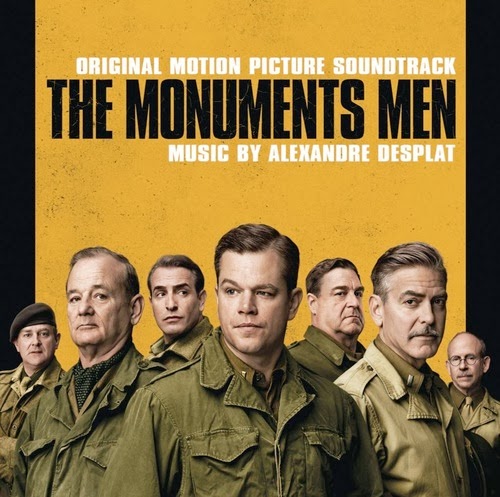
The Monuments Men Score Review

Title: The Monuments Men
Composer/s: Alexandre Desplat
Length: 1 hour
Track Count: 25 tracks
Year of Release: 2014

Films with huge, star-studded casts have a very up and down history; so many fall down in the wake of things. The Monuments Men is a film directed by George Clooney, starring himself, among other big names in Hollywood, such as Matt Damon and Bill Murray. It's sure to garner some big press with those names on the bill, although the film has opening to mixed reviews. The Monuments Men is an historical drama, and for the scoring of the film, Clooney recruited Alexandre Desplat, of Skyfall, Harry Potter and Argo, a man who has a taste for classical music. Based on his filmography, I'd say it was a fantastic decision to recruit Desplat; the man is a very capable composer, and really delivers when necessary. Despite the little hiccup that was Philomena, a score which didn't impress me, I still reserve hope for the composer here. Let's see if that hope was in good stem!

The Monuments Men is a score that reminds me of Williams in his prime; ripping it up with huge scores that have that bombastic, bold quality that I see in most of his music. The Monuments Men is just that, and a little more! Desplat has infused his usual classical vibe here, that we often see in his other scores. For a film like Argo, I never saw that as working wholeheartedly, whilst here, it works perfectly for the film's World War II setting. I also see a lot of inspiration drawn from Harry Gregson-William's fantastic score for Chicken Run. It has that cheeky feeling to it, for a vast majority of the play time. It's quite enjoyable to listen to!

This is really easy music to sit down and listen to, unlike so many of the scores that are released nowadays, which require your full, undivided attention until the end. The Monuments Men doesn't require any effort; it's just a very simple listening experience. I didn't feel it an effort to go and listen to, as it was so much damn fun! Writing a review on it is even easier! This is one of Desplat's best work, simply because it isn't a grind to get to the other side. Argo was a very well composed score, no doubt about it, yet I found it hard to sit through to the final piece, without pausing the music and leaving it for a while, before returning. I want to find time, on the other hand, to listen to The Monuments Men more often, because it's just so irresistible!

Like so much of Desplat's work, this score is brilliantly composed, as is one of his traits. Every piece is filled to the brim with well placed brass, piano and strings, that all mesh together very well. When the entire orchestra comes out to play, Desplat makes it worthwhile, and it's incredibly satisfying. He enjoys a slow, but steady pace; we see an abundance of emotional, slow pieces, highlighted by some incredible piano solos. My favourite piece on the card, Heilbronn Mine is a slow, but very affecting piano-based piece, which I enjoyed immensely. Nothing is delivered in half measures here; all the themes and material is expanded upon, even within the seemingly short 1 hour long running time. You'd think an hour would be long enough for me, but not in this case! I'd love to hear another hour of the fantastic piano solos! When it comes to the brass, trumpets most notably, Desplat really shines. The brass section sounds so bold and distinct here, and some of the riffs they deliver sound almost as if they've been plucked out of a 60's war score. Desplat has really managed to instill the nostalgia! Desplat as always, has delivered on the composition of the score; it's very well written, and very well performed. 

Conclusion:
The Monuments Men is sure to find itself with an award from myself by the end of the year, and rightfully so; The Monuments Men is a bunch of fun, and makes for an incredibly good listening experience. If you want to spend an hour smiling, I'd certainly suggest The Monuments Men!

Highlights:
1. The Roosevelt Mission
2. Opening Titles
3. Ghent Altarpiece
6. Normandy
7. Deauville
9. I See You, Stahl
10. John Wayne
11. Sniper
13. The Letter
14. The Nero Decree
16. Jean-Claude Dies
17. Siegen Mine
18. Claire and Granger
19. Gold!
20. Heilbronn Mine*
22. Altauessee
23. Finale*
24. End Credits 

Junkie Score: 96.41
Buy or Stream? Buy


Thanks for reading! Here's some links to various accounts:

Thursday, 20 February 2014

Game of Thrones (2011-Present) Series Review

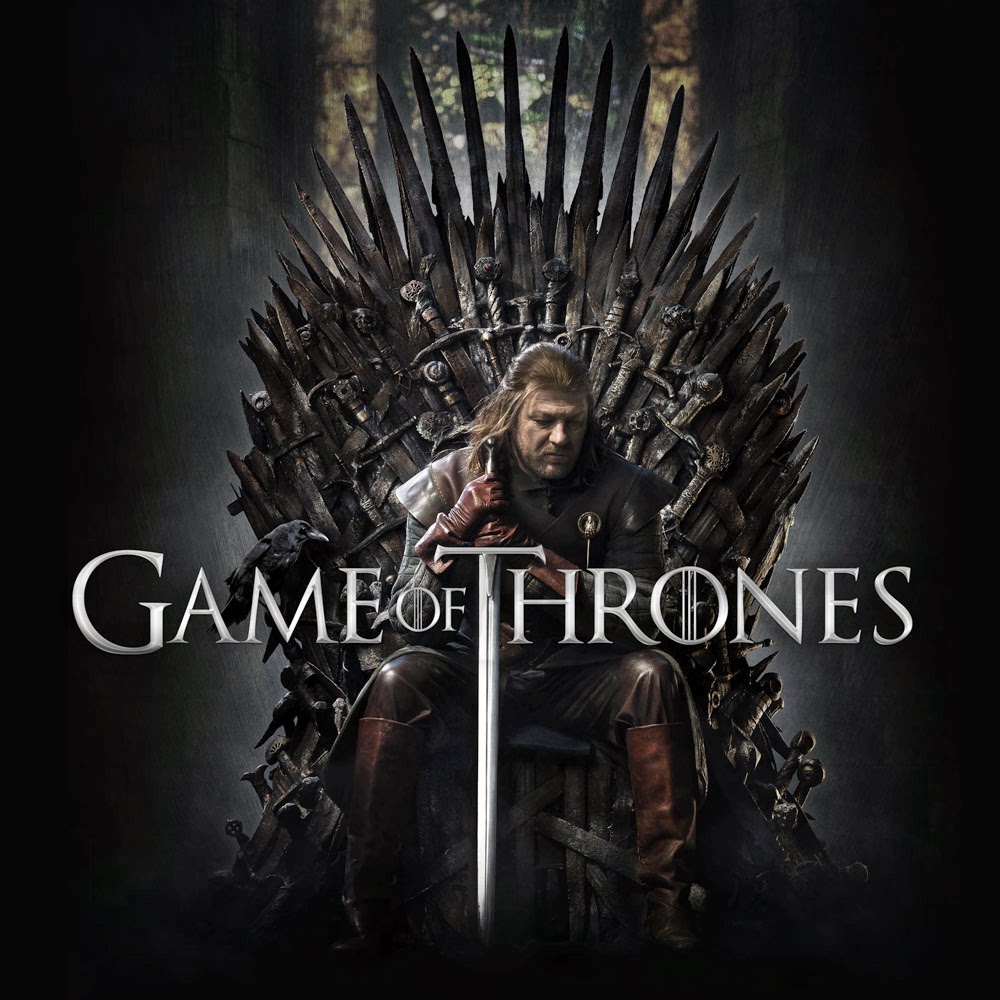
Game of Thrones Poster
Title: Game of Thrones
Writer/s: David Benioff, D. B Weiss 
Season/s: 3
Starring: Emilia Clarke, Kit Harrington, Sean Bean, Jack Gleeson

It's the most wonderful time of the year, my friends! Better than Christmas, certainly, is the return of Game of Thrones, for another season! Being such a huge fan of the show, I simply can't wait for the next season, hitting us in April. In anticipation for the next big season, I decided I'd construct a review on the previous seasons, and how I view them. Well, here you have that very review, in all it's glory!

Game of Thrones is based upon the books written by George RR Martin, a brilliant man, to say the least. At the writing of this review, I've read the first book, and a small amount of the second, and I can say that they are masterful pieces of work; every page fills you with anticipation for the next, and even at quieter moments, the story sticks personal and strong. And, not to mention, the plot twists and notorious deaths! Martin is now quite famous for his killing of popular or minor characters, seemingly out of the blue. Martin manages to leave small hints of someone's fate, without throwing you the bone. Instead, he bides his time, before hitting you over the head with some shocking twist that will leave you crying, laughing or yelling at the book. It's a way of writing that I enjoy; where the characters are always in peril. Now, with all these twists and deaths, it is quite astounding that David Benioff and D. B Weiss managed to convert these huge books into 3 coherent, faithful and intelligent 10 part seasons, all with some brilliant moments. Whilst a few moments and deaths here and there part from the books for a short while, the writers never stray too far from the source material, and that's what really makes Game of Thrones into something of it's own; it's based upon a fantasy book, with huge scale, yet despite those factors that normally would ruin a television series, Game of Thrones certainly is not crippled. It rises to the challenge of creating a haunting, dark, yet grand series, that has spectacle wherever you look. For a television series, that is certainly not a common trait. 

In Game of Thrones, we are thrown into the mythical land of Westeros, a place where kings bicker and war for the throne that lies in King's Landing, the hot capital of the seven kingdoms of Westeros, that lies in the South. King Robert Baratheon sits the throne, after not 15 years ago he rebelled against King Aerys Targaryen II, also known as The Mad King. Robert's right hand man, known as the King's Hand, Jon Arryn, has died, when we appear in Westeros. Robert decides to seek out Lord Eddard Stark, who is Warden of the North, the cold region of Westeros. Robert comes to Stark's home in Winterfell, and asks of him to come down to King's Landing to rule by his side as the King's Hand, and Eddard agrees, after some convincing from his wife Catelyn that he was needed to do some investigating down South, for her sister. Meanwhile, across the Narrow Sea, to the East, Daenerys Targaryen is being married off to a brutal warrior in Khal Drogo, leader of the horse warriors, the Dothraki people. She and her brother, Viserys, intend to take back the Iron Throne in King's Landing; the throne that they were stripped of as Targaryens, by Robert Baratheon. From these points, a plethora of characters, both noble and highborn, and poor and lowborn, attempt to kill and destroy each other, all in the hopes of achieving the crowning glory; the Iron Throne.

On an acting front, 99% of the cast delivers, with a few exceptions at various points. The main character for the first season, Eddard Stark, is played by the great Sean Bean, who is absolutely brilliant. The already deep character that was invented by Martin is given further depth, thanks to Sean Bean's likability. He's incredibly easy to root for, and makes for a wonderful protagonist. Emilia Clark plays Daenerys Targaryen, and for the most part she gives some really awesome performances. There are a few scenes here and there where she lacks range and menace where she is meant to, yet these are outshined by her so many captivating, personal moments. Mark Addy is amazing as King Robert Baratheon, and perfectly encaptures the crude, vulgar man that makes us all laugh so often. Jack Gleeson is the actor who gets barely a mention, despite his wicked, sinister performance as the cruel and evil Joffrey Baratheon/Lannister, whom is heir to the Iron Throne. He really gives one of the best villainous performances I've ever seen; you just love to hate him! Lena Heady, from 300, who plays the plotting and calculating Queen Cersei is wonderful, and Peter Dinklage, who plays Tyrion Lannister, a dwarf, is sublime. His chemistry with Jerome Flynn, who plays Tyrion's companion Bronn, is some of the best that I've ever seen. It's wonderful to watch their witty banter that never seems to get old. The real stars here, to be blatantly honest, are the younger actors. Maisie Williams, who plays Arya Stark, the youngest, ratty daughter of Eddard Stark, is incredibly relatable and fun to watch on screen, and gives one of the best performances on the show. Sophie Turner, who plays the frustrating Sansa Stark, gives an equally powerful and brilliant performance, despite her young age. As you can certainly see, Game of Thrones is very much an ensemble piece, and it works entirely in it's favor. No other show on the air right now has a cast near the enormity of Game of Thrones, and it's one of the best aspects of the show. The acting here is truly sublime, for the vast majority of it's running time. 

The locations for the show are immersive and amazing, to add to the already beefed out cast. From Malta to Iceland, the location scouts have certainly succeeded on finding vast, beautiful locations that have all the details fitted out before the crew even arrives. Malta and Croatia serve as two of the many locations that were chosen to serve as backdrops and sets for scenes set in King's Landing, and they both allow us to seemingly drift into this world. They both represent the hot, humid conditions that Martin described King's Landing to be within his books, so on that level, they certainly succeed. When we move to the great ice Wall in the North of Westeros, we get to see the vast landscape of Iceland, which is surprisingly one of the most majestic locations we see in the entire show. All the lighting is well done, and it really conveys that cold, harsh feel that the North is meant to have. The location scouts need to get a pat on the back, because I don't think I've seen such great landscapes and backdrops for television or film, since Lord of the Ring's fantastic New Zealand scenery. That is high praise worth giving.

When it comes to such a large beast of a project like Game of Thrones, it can be incredibly difficult to deal out time towards all the main players in the show; and believe me, there are a damn lot of them. The first season boasts a staggering amount of individual story lines, not all of which directly impact upon the others, which can make for a little bit of confusion as to what's going on with who if we had different writers and directors. Fortunately, the directors and writers all handle the complex task of transferring so many stories into coherent episodes perfectly, and it makes for an interesting television show. We have Daenerys Targaryen over the Narrow Sea, not even on the same continent as our other main characters, and yet she is an incredibly vital piece of the puzzle that makes this story so involving. The rest of the main characters and story lines are spread over a vast area; Jon Snow, the bastard of Eddard Stark, goes to the Wall in the North, which holds out strange magical beings and wildings, all of whom aren't to make passage into the seven kingdoms. From Snow's story line in the most far North of the kingdoms, to Sansa Stark's story line that takes place in the South. All the story lines may be set out over vast distances, yet they still contain some resemblances; all are vying for, or are a big part of maintaining control, order and power over the kingdoms of Westeros. It's all a struggle of power that we witness in Game of Thrones, all of which allow a number of brilliantly diverse, yet similar story lines and goals. Ultimately, it's a brilliant feat that everything has been transferred so well in the scheme of things. If one story line had have lost focus, the entire show could've been ruined. Fortunately, though, Weiss and Benioff have written the show as to not let that happen. It makes for intelligent and captivating story telling that truly works. 


Conclusion:
Game of Thrones is a spectacle not to be missed, one that demands your attention, and receives it. It's grand, brilliantly written, vast and acted to perfection. The standard of television fantasy has risen thanks to Game of Thrones, and that is surely for the best. The next season of Game of Thrones is sure to be good, and I truly hope you can tune in!

Junkie Score: 100
Buy DVD or Stream? Buy


Thanks for reading! Here's some links to various accounts:


Monday, 17 February 2014

Mandela: Long Walk To Freedom (2013) Film Review

Mandela: Long Walk To Freedom Poster
Title: Mandela: Long Walk To Freedom
Director: Justin Chadwick
Screenwriter: William Nicholson 
Length: 141 minutes
Year of Release: 2013

Mandela: Long Walk To Freedom is a film directed by Justin Chadwick, and stars Idris Elba, Naomi Harris and Terry Pheto. It's based upon the autobiography of the same name, which looks into most of Nelson Mandela's life, and the struggles he went through to unite his country, no matter the colour of skin.

To begin, I'll start with the biggest negative relating to this film. Ultimately, Mandela: Long Walk To Freedom feels like a highlights reel of Nelson Mandela's life. Nicholson, the screenwriter, appears to have tried to cover as much of Mandela's life as possible, despite the consequence that the film may turn out oddly paced. And that's what it really is, thanks to Chadwick's final execution; very oddly paced. The vast majority of the film simply rushes through most of the story. The first 30 minutes or so, fortunately, is well paced, and introduces you to Mandela in his younger days perfectly, and allowed you time to draw close to the character, and feel his triumphs and failures. But it's when he reaches the imprisonment section of his life, that the film's pacing varies. For portions of his 27 year long imprisonment, we have lingering moments which keep to an idea or period of time for more than a few minutes. To begin with, we watch his first few days in prison in their entirety, so as to be introduced to the idea of what Mandela's life will be like for the next great portion of his life. But from there, the whole 27 years simply floats away, and we don't really appreciate the amount of hardship and struggle he has to overcome in those long years. That was the portion I was most interested in seeing, and it seemed to fail my expectations. The rest of the film, after the prison portion, seems to edge out and resume good, solid pacing, but ultimately, the damage has already been done at that point.

I should leave the negatives behind for now, and point out some positives to be had here. Idris Elba as Mandela is a wonderful piece of casting, and he carries the film perfectly. He handles both the charisma and power in Mandela's younger years, to the older, more subtle presence he commands in his later days, and really captures your emotion. He's a very good actor, and this only reinforces that fact. The rest of the ensemble gives solid performances; there simply isn't one that I can downright criticise. Naomi Harris, who plays his wife Winnie Mandela, is very well cast, and gives a very powerful, strong performance on all fronts. Another good performance to be noted was offered from Riaad Moosa, who plays one of Mandela's right hand men, and he gave a small but passionate performance in his supporting role. 

This film, to my delight, didn't necessarily show Mandela as an incredibly calm, brilliant, soft man all of the time. Nowadays, he is considered one of the greatest men who ever lived, and people talk of him as if he was a saint. And yes, he certainly did some incredibly brilliant, wonderful things for his people, yes still, he was a human, and humans don't always act with the best of intentions for everyone. The film portrays Mandela as someone with faults, but yet still a human who can be looked up to by anyone. The first portion of the film, where we see his rise in prominence has him pushing away his first wife and children, so that he could spend more time campaigning. Whilst his work was incredibly important, it does anger you a small amount, seeing this hard working woman having to take all the responsibility for the family, because her husband is so concentrated and driven upon his work. These faults help make Mandela into something less of an idol, and more into someone who we can relate to, and sympathize to. Chadwick captures that vulnerable, human side of Mandela so well throughout the film, despite it's pacing problems, and it makes for a protagonist whom is much more interesting than he could've been.

The production value of the film is impressive, with some very nice set pieces. The replica of the Robben Island prison, where Mandela was held for a vast portion of his imprisonment, is quite spectacular, to say the least. Take a look around the internet, and you'll find that the set designers really tried to create an environment which has the same properties as the actual Robben Island location, and has a hostility about it, something that a prison certainly should incorporate. The camera work is also very good as well. There are quite a few irritating stylistic shots, with sun beaming into the camera, and close up galore, yet these don't detract from the overall spectacular work of the cinematographer, Lol Crawley. By the way, I'm not kidding when I say his name his "Lol," because it actually is! Crawley and Chadwick work together to create a very beautiful, well executed film in the way of production design and camera work. 


Conclusion:
Mandela: Long Walk To Freedom tries desperately to capture you in it's grasp, and fill you with tears by the end, but unfortunately, it misses that stage by quite a bit. The pacing is mismatched at best, yet Elba's performance as Mandela is mesmerizing, and the writing is still very good. Whilst maybe a little too long, it's a very well made film, and one that has you invested from start to finish.

Junkie Score: 8.0
Worth Admission Price? Yes

Thanks for reading! Here's some links to various accounts:


By the way, I apologise for my lack of posting this last week. My desktop computer's mouse has stopped working, and I'm much too lazy to get off my ass and grab a new one! Expect at most, 1 or 2 more reviews this week, and possibly a catch-up for last week's missed episode of Arrow; I couldn't seem to find it on my iPod, damn it!